

One Third of PhDs Suicidal?
Becoming a PhD candidate is a landmark moment in many people’s lives. It can represent a once-in-a-lifetime opportunity to make a positive impact on the world, build a career and get some of the best training and development money can buy. Anyone accepted as a PhD candidate, with or without a scholarship, has reached the pinnacle of formal education. They should feel empowered, privileged and a profound sense of achievement.
Many new PhDs exude an air of confidence at the outset of their journey, freely sharing their research ideas and expressing optimism for their work trajectory and life plans. In the UK, the October intakes throngs to welcoming events where Directors of Graduate Studies and Vice Chancellors urge the candidates to ‘change the world’ and ‘make a difference.’
However, despite this auspicious beginning, the mental health of many of these candidates declines dramatically over the course of their research. Investigations demonstrate that postgrads experience, declining optimism, social isolation that undermines confidence, and demotivating uncertainty about the future. In many PhD communities signs of problematic health are visible in some candidates within a few months of the start of their research.
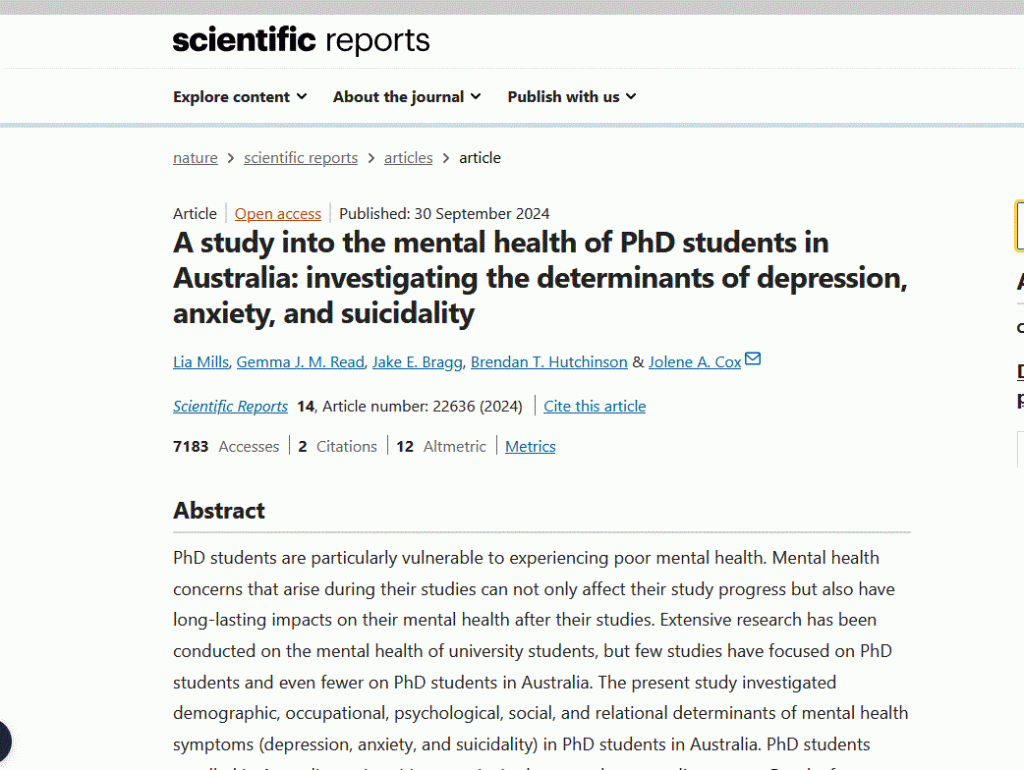
A recent study of PhD mental health in Australia found that:
- almost half of all participants met the threshold for moderate to severe depression.
- 39% reported indications of moderate to severe anxiety.
- over a third were considered at risk of suicide.
While this study was preliminary, its findings reflect growing concerns about PhD health and wellbeing, particularly apparent since 2021. There is concern both about the scale of the problem and the lack of awareness of just had dreadful things can be for some of our best and brightest.
Its paradoxical that this elite stage in academic training and development, available to so few, becomes a nightmare for many. Even those that complete the research and obtain their Doctorates frequently turn their back on academia, feeling let down and even scarred by the experience. This level of psychological suffering demonstrates that Universities must do more to support the mental health of their postgrads. If this level of psychological suffering continues to increase, the current structure of Higher Education in some countries will be unsustainable. Is so, this will likely have a knock on effect to funding models and the quality of high-level research and practice in society more generally.
Researchers have found that PhD’s from different cohorts report that; social isolation, lack of confidence, poor quality supervision, and concerns about finances are common. Ironically if appropriate support could be given to students at an early stage many of the longer term and intractable mental health problems might be avoided. There are many people working with mental health in universities across the globe; but frequently interventions come when students have already developed problematic thinking patterns. When established, mental health challenges are often just treated and not overcome, this can lead to lifelong issues.
The lack of proactive programmes in many universities designed to support PhD mental health is a concern, the data clearly shows that postgraduate wellbeing has reached critically low levels. Universities often fail to identify and support students who are in difficulty, and the culture of many PhD cohorts mean that some students hide problems lest they fail to ‘measure up’.
On a positive note, many of the problematic issues experienced by PhDs can be addressed by universities effectively at an early stage. There is no suggestion that any university can solve all of the mental health problems of all its stakeholders. However, serious thought and subsequent action need to be taken where large numbers of participants in any course of study develop clinical conditions. The challenge to think about the PhD journey as an opportunity to Thrive not simply Survive.






 Mindtraining for Life
Leave a comment